
How Effective Are Non-Surgical Hair Restoration Methods?
Updated: Jun 24
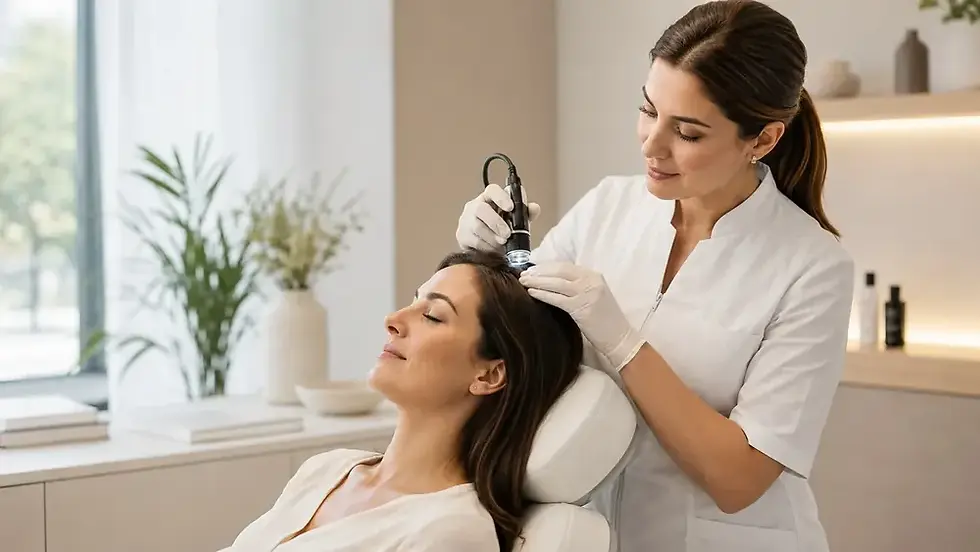
Hair loss can feel overwhelming, especially when you are unsure whether your shedding, thinning, or scalp changes are temporary or progressive. The good news is that not every case of hair loss requires surgery. Many people can improve hair density, reduce shedding, support healthier regrowth, and slow progression with non-surgical hair restoration methods.
However, effectiveness depends on one important factor: the correct diagnosis.
Hair loss is not one single condition. It may be linked to androgenetic alopecia, telogen effluvium, scalp inflammation, nutritional deficiencies, hormonal shifts, stress, illness, medication changes, traction, or scarring scalp disorders. A treatment that works well for one person may do very little for another if the underlying cause is different.
What are non-surgical hair restoration methods?
Non-surgical hair restoration refers to treatments and supportive strategies designed to improve scalp health, stimulate follicles, reduce shedding, and strengthen existing hair without a hair transplant.
So, how effective are these treatments?
Non-surgical hair restoration can be very effective , but it is not instant and it is not a one-size-fits-all solution.
For many clients, the most realistic goals are:
reduced shedding
improved scalp condition
stronger, healthier hair growth
better hair density over time
slowing the progression of pattern hair loss
maintaining existing hair for longer
Most non-surgical methods work best when follicles are still active. Once follicles have permanently miniaturised or scar tissue has replaced the follicle, regrowth becomes much more limited. This is why early assessment is so important.
Why personalised treatment matters
The most successful non-surgical plans are rarely based on one treatment alone. A trichology-led approach looks at the bigger picture: scalp health, hair shaft quality, shedding patterns, medical history, lifestyle factors, nutrition, hormonal influences, and family history. Hair loss is not a one-size-fits-all, that's why a trichological assessment is so important.
The bottom line
Non-surgical hair restoration methods can be very effective, especially when hair loss is identified early and treated according to the underlying cause. They can help reduce shedding, support healthier regrowth, improve scalp condition, and maintain existing hair.
The key is not simply choosing the most popular treatment. The key is understanding why the hair loss is happening and creating a plan that supports the scalp and follicles appropriately.
At Carmen Du Preez Trichology, consultations are designed to assess your hair and scalp concerns carefully and guide you toward a personalised, evidence-informed plan.
To book a consultation with Carmen Du Preez Trichology in Perth, visit: www.carmendupreeztrichology.com
About the author
Written by: Carmen Du Preez, IAT Certified Trichologist.
Carmen Du Preez is a Perth-based Certified Trichologist and member of the International Association of Trichologists. She provides trichology consultations for hair loss, hair shedding, thinning hair, and scalp conditions at Carmen Du Preez Trichology in Trinity Arcade, Perth.
Related articles:
Last updated: 1 June 2026


Comments